Southeast Sales Rep Agency

Southeast Sales Rep Agency
111 East Chateau Drive, W. Columbia, SC 29170
803-260-4881

Tuesday, August 1, 2017

New Bathroom Idea Book

Available from The Taunton Press and written by designer, author and KBDN contributing writer Jamie Gold, CKD, CAPS, The New Bathroom Idea Book lives up to its promise, offering a wealth of inspiring ideas for the bathroom.

The book covers all of the major areas of the bath, from vanities, countertops and bath fixtures to flooring, lighting and finishing details. More than 370 photos showcase a wide array of bath configurations, with creative imagery reflecting a variety of design styles that will appeal to both consumers and the trade.

Gold also addresses key hot button topics, including energy use codes, and accessibility and aging in place – which are increasingly important to both aging baby boomers and younger generations who may end up with both young children and older parents sharing their home.

The book leads off with a “Plan Your Bath” section, in which Gold offers consumers helpful tips for assessing their needs, the space and the scope of the project.

The author also addresses budget issues, as well as explaining the difference between different types of professionals, from architects and design/build firms to bath designers, interior designers and general contractors.

Subsequent chapters look at how to work with the existing space; tips for identifying and finding a style that fits with both the homeowner’s tastes and the rest of the house, and a look at products, including fixtures and faucets; storage; the shower space; floors, walls, windows and doors; lighting, heating and ventilation; entertainment, electronics and extras; and decorative touches.

In each chapter, a “Hot Trends” section focuses on recent bath advancements, from digital shower systems with multiple presets to medicine cabinets with built-in speakers and more.

The book provides a comprehensive yet easy-to-understand guide for consumers looking to educate themselves as they begin their journey toward finding the right design professional to partner with on a new bath or renovation project. While geared for consumers, design professionals will find plenty of inspiration within the pages, as well as useful ideas for introducing their clients to new ways of thinking about their upcoming bath projects.

What's App: Photo That Measures

Kitchen & Bath Design News
April 3, 2017
http://s3-us-west-2.amazonaws.com/sola-images/wp-content/uploads/2017/03/23170557/Photo-Measures-Metrics-300dpi-683x1024.jpg
Courtesy of Big Blue Pixel Inc.
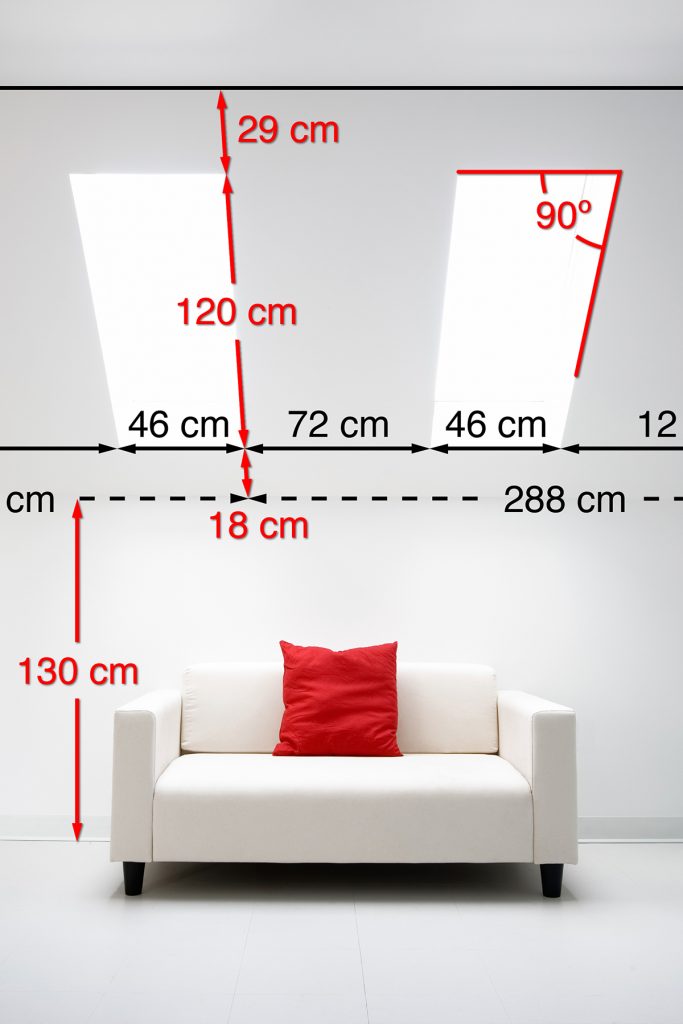
What it is: An app for keeping track of measurements on a picture of a room or object.

What it does: The app allows users to take a photo of a room and directly draw measures on it that can be saved and referenced at a later time. Additional features include zooming in and out of the photo to provide more precision; the ability to quickly add text as comments when more than just measures are necessary; native support for angles; the ability to save measures in imperial or metric units; organizing photos by category; exporting the dimensions in high resolution by email or in the device’s photo library; exporting the file as a PDF or JPG, and importing photos of any size and aspect ratio. The cost of the app is $6.99, but there is also a free “Lite” version available with a few limitations: “Lite” only allows for two photos to be measured, and all exported files include a watermark.


Who it’s for: Designers, architects, contractors and homeowners.

Why kitchen and bath designers need it: Photo Measures allows designers to include accurate measurements on photos they take of the projects they will be working on, providing a visual reminder as well as necessary information. Additionally, the action of taking note of project measurements at a first meeting shows the client that you are resourceful and able to start work on their home right away.

Available since:  January 2011 on iTunes, October 2013 on Google Play

Who makes it: Big Blue Pixel Inc.

Platform: iOS for the iPhone and iPad, Android OS

Where to find it: On the iTunes Store, on Google Play

Monday, July 17, 2017

Concrete Countertops Increase Kitchen Options

Make a splash in the kitchen with the distinctive use of concrete.


Since the kitchen is the hub of culinary creativity, more homeowners are moving away from the manufactured look of laminates and choosing materials that are as inimitable and timeless as a treasured family recipe. Countertops made from concrete are the latest trend du jour in kitchen interiors. Discriminating homeowners are discovering that this versatile, moldable medium can be handcrafted into a distinctive surface that expresses their individuality, design preferences and even their cooking style. (Note: If you're open to other materials, you might also want to consider engineered stone and recycled glass countertops.)

"The clients I work with feel that the current crop of countertop choices — granite included —are too ordinary, passé or inadequate to satisfy their particular vision for their kitchen," says Jeff Girard, founder of FormWorks, Raleigh, N.C., and president of the Concrete Countertop Institute, a training facility offering hands-on instruction in concrete countertop fabrication. Girard has seen the demand for concrete countertops skyrocket, especially among homeowners eager to participate in the creative process. Residential kitchen and bath remodels represent a large portion of his work.

"Concrete countertops are not simply sidewalk slabs slapped onto cabinets," Girard explains. "These are carefully crafted, highly engineered slabs that are processed to achieve a high degree of fit and finish."
Photo by HGTV

A Look of Distinction

Most concrete countertops are precast in molds built to the customer's specifications so they can be formed, cured and finished under controlled conditions. However, some fabricators prefer to cast the countertop onsite, setting the mold on top of the base kitchen cabinets and then filling it with concrete. Regardless of the casting method used, these are not cookie-cutter creations. Every casting is custom-made and thus inherently unique.

Concrete countertop makers often develop their own signature looks by using proprietary mix ingredients, casting techniques and surface treatments. Many are artists by trade and will collaborate with homeowners, architects and interior designers on ideas that will add to the character and individuality of the final product. The options for personalizing concrete countertops are endless. Here are just a few of the possibilities:

  • Incorporate curves and angles. Customize the color to match another kitchen design element, such as a tile, a swatch of fabric or a favorite piece of china.
  • Add sparkle with aggregates or glass chips — even fiber-optic lighting.
  • Incorporate personal mementos, such as bits of broken dishware and bottle fragments excavated from the backyard of an old home.
  • Integrate built-ins: sinks, drain boards, soap dishes and trivets are all easily integrated into concrete countertops and, in many cases, are also cast from concrete.

Back to Nature

Concrete can be earthy and natural, with a tactile quality not found in synthetic or stainless-steel surfaces. Because each concrete countertop is hand-cast, it exhibits subtle variations in color and texture. Concrete countertops can also be adorned with botanical imprints from real leaves or embedded with colorful stones, seashells and even fossils.

The environmental benefits of concrete also appeal to homeowners — especially those who are using eco-friendly cabinet designs. Concrete is an eco-friendly alternative to petroleum-based synthetic products and nonrenewable natural materials such as quarried stone. Some concrete countertop makers incorporate natural minerals and recycled materials into their creations, such as fly ash (a byproduct of coal production), metal shavings, plastic regrinds, recycled glass and scrap wood chips.

The Cost of Creativity

Because of the time and craftsmanship required to build a concrete countertop, the price tag can be high, from about $65 to $125 per square foot, depending on the degree of handiwork involved, according to Concrete in the Kitchen, published by The Concrete Network.

"Concrete countertops — like any other custom handmade product — command premium prices," Girard says. "They are very labor-intensive to produce, and the quality is entirely dependent on the skill and craftsmanship of the maker."
But for the homeowner in quest of an artistic, one-of-a-kind countertop that transcends the commonplace, concrete may be well worth the premium.
 

Thursday, June 15, 2017

Get Your Customers Thinking About Their Dream Outdoor Kitchen.

 Jill Odom, June 13, 2017


This outdoor kitchen was designed and constructed by Paradise Restored Landscaping in Portland, Oregon.
Photo: Media Director/Flickr
As the official start of summer is only days away, folks have already started firing up the grill and hosting cookouts, and your clients could be experiencing some outdoor kitchen envy.
Because constructing an outdoor kitchen with a built-in grill has a lot of factors going into it, the length of the project can vary, especially depending on what else the client is wanting added to the space. If you’re like most contractors, you can be booked out for weeks at a time during this busy season, but this doesn’t mean you have to turn these potential customers away.
If they are willing to be patient and can wait for their built-in grill another year, you can help them start paving the way during the delay by having them consider all the design elements now so they are ready in fall or spring for construction.
They can think they want the whole nine yards, but if you prompt them to ask themselves the right questions you can help them create an outdoor kitchen space that truly meets their needs.

Location

Selecting a good location for the grill is crucial as it will help determine the flow of the space, and also depending on the area there may be requirements on how close the grill can be to the home. Another factor you want to consider when selecting a location is the general wind pattern of the yard so smoke isn’t constantly blown toward their guests or back into the home.
Your clients may think they want to have the kitchen farther out in the yard, but remind them that they’ll need far more elements, like refrigerators, and gas or electrical lines will have to be run out there. Keeping things closer to the house can help them keep things more intimate, and running back in for an ingredient will be less of a hassle.
Depending on the area’s climate you’ll need to discuss with your client adding elements to make the space pleasant for as many days of the year as possible, whether it be shade structures for sultry Southern areas or space heaters for cooler mountainous regions.

Layout

There are multiple ways to lay out the outdoor kitchen but here are some of the basic setups and what they are suited for. Placing the grill and counter all along one wall is a budget-friendly option and works well for one cook, and the seating area can be placed elsewhere. Another option is the L-shape setup, which lends itself to buffet style eating, and more than one cook can be in the space.
For those who are installing multiple appliances, the U-shape configuration can help keep everything within range and double as a seating area. An island setup can be used as a hub for entertaining. A raised counter can keep the grill separate from the seating area.

Materials

Just like an indoor kitchen, your client is going to have to decide what they want for flooring and countertops. The patio can help bring together the whole space and will need to be a hardscaping material that can stand up to food stains and won’t be slippery when wet. Tile or marble can become slick and a safety hazard if a pool is nearby.
As for the countertops, a wide variety of materials are suitable for withstanding the outdoors. Granite is a natural go-to option, but other options include soapstone, tile and concrete. Two countertop materials to avoid are Corian, which will fade, and quartz, which will yellow in the sun.

Appliances

When it comes to what appliances to include, ask your clients to consider their entertaining habits. Do they invite guests outside often and have a climate that accommodates it? Or do they prefer to save the grilling for holidays like the Fourth of July? Also ask them to consider if they want to do their meal prep indoors or to fix it all outside.
If they merely want to cook the food outside, stick with the simple grill and some counter space for prep. For those wanting the full-blown operation, they can include features like an outdoor refrigerator, stainless steel sink, warming drawers and even an outdoor oven. Depending on the clients’ food preferences they can also add special amenities like pizza ovens or smokers.
Whether they’re going simple or extravagant, some storage should be advised so they aren’t having to run indoors for literally every utensil needed while cooking. The cabinetry needs to be waterproof and durable to temperature changes. Stainless steel is often a common choice.

Style

Because this is often an extension of the home, the outdoor kitchen space needs to incorporate elements that go with the architecture of the home, as well as the customer’s personal taste. Having cohesive colors can also help make the space flow with the rest of the house.
Chairs, tables and decorative objects can help make the space look more welcoming. Depending on how the space will be used can also help determine what style would work best. If the client likes to host parties, make sure the space is designed big enough to accommodate the guest and that there are ample seating areas.
Others may want to keep things more intimate and so the design should be properly proportioned for a smaller space.
Once your client has considered all of these factors, they are far more likely to get the built-in grill and outdoor kitchen space they want and need.
- See more at: http://www.totallandscapecare.com/landscaping/outdoor-kitchen-design-elements/#sthash.AJDH3rMA.dpuf


This outdoor kitchen was designed and constructed by Paradise Restored Landscaping in Portland, Oregon.
Photo: Media Director/Flickr

As the official start of summer is only days away, folks have already started firing up the grill and hosting cookouts, and your clients could be experiencing some outdoor kitchen envy.

Because constructing an outdoor kitchen with a built-in grill has a lot of factors going into it, the length of the project can vary, especially depending on what else the client is wanting added to the space. If you’re like most contractors, you can be booked out for weeks at a time during this busy season, but this doesn’t mean you have to turn these potential customers away.

If they are willing to be patient and can wait for their built-in grill another year, you can help them start paving the way during the delay by having them consider all the design elements now so they are ready in fall or spring for construction.

They can think they want the whole nine yards, but if you prompt them to ask themselves the right questions you can help them create an outdoor kitchen space that truly meets their needs.

Location
Selecting a good location for the grill is crucial as it will help determine the flow of the space, and also depending on the area there may be requirements on how close the grill can be to the home. Another factor you want to consider when selecting a location is the general wind pattern of the yard so smoke isn’t constantly blown toward their guests or back into the home.

Your clients may think they want to have the kitchen farther out in the yard, but remind them that they’ll need far more elements, like refrigerators, and gas or electrical lines will have to be run out there. Keeping things closer to the house can help them keep things more intimate, and running back in for an ingredient will be less of a hassle.

Depending on the area’s climate you’ll need to discuss with your client adding elements to make the space pleasant for as many days of the year as possible, whether it be shade structures for sultry Southern areas or space heaters for cooler mountainous regions.

Layout
There are multiple ways to lay out the outdoor kitchen but here are some of the basic setups and what they are suited for. Placing the grill and counter all along one wall is a budget-friendly option and works well for one cook, and the seating area can be placed elsewhere. Another option is the L-shape setup, which lends itself to buffet style eating, and more than one cook can be in the space.

For those who are installing multiple appliances, the U-shape configuration can help keep everything within range and double as a seating area. An island setup can be used as a hub for entertaining. A raised counter can keep the grill separate from the seating area.

Materials
Just like an indoor kitchen, your client is going to have to decide what they want for flooring and countertops. The patio can help bring together the whole space and will need to be a hardscaping material that can stand up to food stains and won’t be slippery when wet. Tile or marble can become slick and a safety hazard if a pool is nearby.

As for the countertops, a wide variety of materials are suitable for withstanding the outdoors. Granite is a natural go-to option, but other options include soapstone, tile and concrete. Two countertop materials to avoid are Corian, which will fade, and quartz, which will yellow in the sun.

Appliances
When it comes to what appliances to include, ask your clients to consider their entertaining habits. Do they invite guests outside often and have a climate that accommodates it? Or do they prefer to save the grilling for holidays like the Fourth of July? Also ask them to consider if they want to do their meal prep indoors or to fix it all outside.

If they merely want to cook the food outside, stick with the simple grill and some counter space for prep. For those wanting the full-blown operation, they can include features like an outdoor refrigerator, stainless steel sink, warming drawers and even an outdoor oven. Depending on the clients’ food preferences they can also add special amenities like pizza ovens or smokers.

Whether they’re going simple or extravagant, some storage should be advised so they aren’t having to run indoors for literally every utensil needed while cooking. The cabinetry needs to be waterproof and durable to temperature changes. Stainless steel is often a common choice.

Style

Because this is often an extension of the home, the outdoor kitchen space needs to incorporate elements that go with the architecture of the home, as well as the customer’s personal taste. Having cohesive colors can also help make the space flow with the rest of the house.

Chairs, tables and decorative objects can help make the space look more welcoming. Depending on how the space will be used can also help determine what style would work best. If the client likes to host parties, make sure the space is designed big enough to accommodate the guest and that there are ample seating areas.

Others may want to keep things more intimate and so the design should be properly proportioned for a smaller space.
Once your client has considered all of these factors, they are far more likely to get the built-in grill and outdoor kitchen space they want and need.


This outdoor kitchen was designed and constructed by Paradise Restored Landscaping in Portland, Oregon.
Photo: Media Director/Flickr
As the official start of summer is only days away, folks have already started firing up the grill and hosting cookouts, and your clients could be experiencing some outdoor kitchen envy.
Because constructing an outdoor kitchen with a built-in grill has a lot of factors going into it, the length of the project can vary, especially depending on what else the client is wanting added to the space. If you’re like most contractors, you can be booked out for weeks at a time during this busy season, but this doesn’t mean you have to turn these potential customers away.
If they are willing to be patient and can wait for their built-in grill another year, you can help them start paving the way during the delay by having them consider all the design elements now so they are ready in fall or spring for construction.
They can think they want the whole nine yards, but if you prompt them to ask themselves the right questions you can help them create an outdoor kitchen space that truly meets their needs.

Location

Selecting a good location for the grill is crucial as it will help determine the flow of the space, and also depending on the area there may be requirements on how close the grill can be to the home. Another factor you want to consider when selecting a location is the general wind pattern of the yard so smoke isn’t constantly blown toward their guests or back into the home.
Your clients may think they want to have the kitchen farther out in the yard, but remind them that they’ll need far more elements, like refrigerators, and gas or electrical lines will have to be run out there. Keeping things closer to the house can help them keep things more intimate, and running back in for an ingredient will be less of a hassle.
Depending on the area’s climate you’ll need to discuss with your client adding elements to make the space pleasant for as many days of the year as possible, whether it be shade structures for sultry Southern areas or space heaters for cooler mountainous regions.

Layout

There are multiple ways to lay out the outdoor kitchen but here are some of the basic setups and what they are suited for. Placing the grill and counter all along one wall is a budget-friendly option and works well for one cook, and the seating area can be placed elsewhere. Another option is the L-shape setup, which lends itself to buffet style eating, and more than one cook can be in the space.
For those who are installing multiple appliances, the U-shape configuration can help keep everything within range and double as a seating area. An island setup can be used as a hub for entertaining. A raised counter can keep the grill separate from the seating area.

Materials

Just like an indoor kitchen, your client is going to have to decide what they want for flooring and countertops. The patio can help bring together the whole space and will need to be a hardscaping material that can stand up to food stains and won’t be slippery when wet. Tile or marble can become slick and a safety hazard if a pool is nearby.
As for the countertops, a wide variety of materials are suitable for withstanding the outdoors. Granite is a natural go-to option, but other options include soapstone, tile and concrete. Two countertop materials to avoid are Corian, which will fade, and quartz, which will yellow in the sun.

Appliances

When it comes to what appliances to include, ask your clients to consider their entertaining habits. Do they invite guests outside often and have a climate that accommodates it? Or do they prefer to save the grilling for holidays like the Fourth of July? Also ask them to consider if they want to do their meal prep indoors or to fix it all outside.
If they merely want to cook the food outside, stick with the simple grill and some counter space for prep. For those wanting the full-blown operation, they can include features like an outdoor refrigerator, stainless steel sink, warming drawers and even an outdoor oven. Depending on the clients’ food preferences they can also add special amenities like pizza ovens or smokers.
Whether they’re going simple or extravagant, some storage should be advised so they aren’t having to run indoors for literally every utensil needed while cooking. The cabinetry needs to be waterproof and durable to temperature changes. Stainless steel is often a common choice.

Style

Because this is often an extension of the home, the outdoor kitchen space needs to incorporate elements that go with the architecture of the home, as well as the customer’s personal taste. Having cohesive colors can also help make the space flow with the rest of the house.
Chairs, tables and decorative objects can help make the space look more welcoming. Depending on how the space will be used can also help determine what style would work best. If the client likes to host parties, make sure the space is designed big enough to accommodate the guest and that there are ample seating areas.
Others may want to keep things more intimate and so the design should be properly proportioned for a smaller space.
Once your client has considered all of these factors, they are far more likely to get the built-in grill and outdoor kitchen space they want and need.
- See more at: http://www.totallandscapecare.com/landscaping/outdoor-kitchen-design-elements/#sthash.AJDH3rMA.dpuf


Jill Odom | June 13, 2017

Tuesday, May 30, 2017

Keeping an Eye on Rising Costs


“ The market is promising. But it means little if costs rise as quickly as revenue, and profit goes up in smoke.”


As 2017 approaches midyear, it’s clear that the market has become a double-sided coin: rife with exciting opportunities, yet full of critical challenges.

The good news, of course, is that housing, remodeling and the kitchen/bath niche all continue to post steady, sustainable gains. The residential remodeling market is pegged at more than $300 billion this year, much of it in kitchens and baths. Housing starts and home sales remain on the rise. Shipments of key products continue to post gains. Rising consumer confidence, an improving jobs market and a wide range of demographic and lifestyle factors are expected to fuel continued growth.

But today’s robust market is coming – quite literally – at a cost. And it’s a price tag that needs to be both monitored and controlled.

To wit, according to a major survey conducted for Kitchen & Bath Design News, rising business costs are proving problematic to a significant number of kitchen and bath design firms – even as revenue continues to climb.

The survey, conducted last month by KBDN’s exclusive research partner, the Research Institute for Cooking & Kitchen Intelligence (RICKI), found that the two cost centers kitchen/bath design firms are finding most difficult to control are subcontractor and product costs. Specifically, subcontractor costs are the leading cost-containment issue for small businesses, while product and payroll costs are proving more vexing for larger firms.

The reasons for this should be evident. Kitchen and bath design firms have always had little control over product prices, which are determined solely by suppliers. At the same time, a strengthening job market, as in the past, has led to increased competition for workers, driving up employee wages and retention costs, while ongoing labor shortages in many markets are driving up the cost of hiring skilled subcontractors.

All of this threatens the ability of kitchen and bath design firms to meet increased market demand while maintaining cost-effective operations and preserving healthy profit margins. It also points to a heightened need to implement appropriate financial controls and related disciplines, to control costs in a way that doesn’t jeopardize either operations or reputations.

Interestingly, despite the cost challenges they’ve faced, gross profit margins for residential remodelers have reportedly gained ground for the past several years – a sign that businesses are being run more efficiently.

The KBDN/RICKI survey found, for example, that kitchen and bath design firms are reporting average gross profit margins in excess of 30%, with expectations for those margins to rise even more in the next fiscal year.

Nonetheless, kitchen and bath design professionals will no doubt continue to be squeezed with respect to spiraling costs. It’s inevitable in a growing market. Businesses will have to be selective about the projects they take on, and be careful about committing to cost estimates. They’ll have to keep as close an eye on the bottom line as they do on sales, paying scrupulous attention to margin preservation, profit-draining oversights and other financial disciplines.

The kitchen and bath market remains rich with promise – lots of exciting opportunities, lots of homes to be remodeled and built, lots of money to be made. But all of it means little if costs rise as quickly as revenue, and profit goes up in smoke.
Voice your opinion! This site requires you to login or register to post a comment. No comments have been added yet. Want to start the conversation?

Thursday, May 11, 2017

Goodbye Stainless, Hello Matte

A new trend in kitchen appliances

Published

If you’ve redone your kitchen or purchased an appliance in the last decade, chances are it has a stainless steel finish. Stainless has been the leader in kitchen décor for many years, and a sparkling new kitchen with granite counters and shiny appliances was the preferred style for many consumers.
As always, times — and trends — change. Available in a variety of colors, from neutrals like slate gray and black to bold hues like red and blue, matte finish appliances have arrived on the scene and are gaining in popularity in Western New York. Initially reserved for premium products, appliances like refrigerators, ranges and hoods in matte finishes are now available at mainstream retailers like Home Depot and Lowes.

Jeff Rexinger, longtime sales manager at Artisan Kitchens and Baths in Buffalo, said that matte appliances are trending for a number of reasons. Matte finishes in general have become popular in home décor  — from cabinets to lighting to decorative pieces to even pianos — and kitchen appliances are following suit.
“Appliance manufacturers are starting to listen to the design community,” Rexinger said. Randal Sanderson, president/CEO at Kitchen World in Williamsville, agrees. He also thinks the trend is just plain practical, too.  “We started telling people five years ago at Kitchen World, ‘we know you are interested in stainless, but keep in mind stainless appliances  — especially large appliances like refrigerators — are difficult to keep clean.’ Matte doesn’t show fingerprints and is easy to clean,” said Sanderson.  Sanderson also thinks it was time for something new. “The stainless craze has been 13 years or more — and it’s not that practical. Regular high-grade stainless shows everything - it’s like a part time job to polish your stainless refrigerator. People don’t want to spend their evening polishing stainless steel.”

KitchenAid, GE and BlueStar all produce appliances including ranges, refrigerators, dishwashers and microwaves in matte finishes ranging from popular neutrals like gray and black to statement colors like red, blue and yellow.  At Artisan Kitchens and Baths, black and slate gray are the most popular matte colors. “GE Appliances’ Slate Collection is very popular and a nice alternative to stainless. It’s neutral and versatile,” said Rexinger.

A trend within the matte trend, said Rexinger, is customers selecting a range and vent in a bold color and sticking with a neutral for the rest of their appliances. “Customers want something that sets their kitchen apart. You can have a white kitchen and throw a sapphire range and hood in the middle of your cabinet run, and it pops and gives people a beautiful splash of color,” said Rexinger.
But is this trend affordable – and accessible? As for cost, these appliances are “certainly not the bottom of the price spectrum,” said Rexinger. However, there are deals to be had as manufacturers will bundle appliances and consumers can “buy a slate-colored fridge, dishwasher, range and microwave together in the $2,400 price range,” Rexinger added. They are also not exclusive to modern kitchens, said Rexinger: if you pick a neutral color, matte appliances work well in any style kitchen, from modern to Victorian.

Sanderson of Kitchen World sees the brightly hued matte appliances as a way to have fun with your kitchen décor. “We recommend people keep areas of the kitchen neutral that should last for 30 years — the cabinets, countertop — then buy interesting appliances. When it’s time for a change, replace your appliances. What’s not smart is to replace your cabinets, or put in a red granite countertop — you will get tired of that. With appliances, it’s fine to have a little fun.”

Next Hot Housing Market


Starter Homes 

Millennials are buying homes, steering builders toward lower price points


The Wall Street Journal. logo
The Wall
Street Journal 
Laura Kusisto and Chris Kirkham


After sitting on the sidelines for a decade, millennials are buying homes en masse, promising to kick the already strong housing market into higher gear.
Virtually all major builders are migrating away from the luxury homes that dominated the early years of the economic expansion and are focusing on lower price points to cater to this burgeoning clientele.


“There’s an increasing confidence level in that part of the market,” said Gregg Nelson, co-founder of California home builder Trumark Cos. “The recovery is finally starting to take hold in a broader way.”
The share of first-time buyers fell to 32% in 2015, its lowest level in nearly three decades and down from a historical average of around 40%, according to the National Association of Realtors. That number climbed back up to 35% last year.

The housing recovery has been divided, as the luxury market has soared in recent years while the more affordable end of the market has struggled to make up for lost ground. Tough lending standards, slow wage growth, growing student-debt obligations and a newfound fear of ownership have combined to crimp demand among millennials in particular. The return of the starter-home market means the housing bifurcation is finally starting to narrow.

Demographers generally define millennials as people born between roughly 1980 and 2000.
“They’re crawling out of their parents’ basements, they’re forming households and they’re looking to buy,” said Doug Bauer, chief executive of Tri Pointe Group Inc., which operates in eight states.
The return of first-time buyers allays fears that millennials would eschew homeownership and provides a long-awaited infusion of new demand to the market. These new buyers could also be a boon to the overall economy by driving builders to build more homes. But demand is ramping up at a time when supply is already tight and price growth is significantly outstripping wage gains.
Some 854,000 new-owner households were formed during the first three months of the year, more than double the 365,000 new-renter households formed during the period, according to Census Bureau data. It was the first time in a decade that more households chose to own than rent compared with a year earlier, according to an analysis by home-tracker Trulia. In Orange County, Calif., Trumark’s Mr. Nelson said he has been selling entry-level homes at nearly double the rate of his higher-end properties.  He is even gaining confidence to build homes in more far-flung locations. The company is about to begin construction on a 114-home project in the Inland Empire east of Los Angeles and another development in Manteca, Calif., about 80 miles east of San Francisco. Both areas were hard-hit during the housing crash and were among the slowest to recover.
Outside Las Vegas, Tri Pointe has introduced a new-home design that is specifically targeted to millennial buyers, featuring indoor-outdoor patios and deck spaces, as well as a separate downstairs bedroom-and-bathroom suite that could be rented out to a roommate. Mr. Bauer said the homes, geared toward first-time buyers, have been selling more rapidly than pricier homes.
Joey Liu, a 28-year-old technology worker, purchased his first home in San Jose, Calif., earlier this year. He said it is more expensive than renting but that he is getting to the stage in life where it was time to buy. 

“A lot of friends of mine bought a home so I started thinking maybe it was time to buy a home and stop paying rent,” said Mr. Liu, who settled on a three-bedroom townhouse for $690,000. He plans to rent out a room to help with the expenses. He had three house-warming parties to celebrate his newfound status. “This is my first house, so it definitely feels different,” he said. 

In the first quarter of this year, 31% of the speculative homes built by major builders were smaller than 2,250 square feet, according to Zelman & Associates. That is up from 27% a year ago and 24% in the first quarter of 2015.  “Most builders really preferred to stick straight down the fairway, right at the corner of Main and Main. They were afraid to go back into the rough where they built a lot of homes in the prior cycle,” said Alan Ratner, senior homebuilding analyst at Zelman.
Builders said that while they are taking a chance by building homes farther out and starting construction before they have a buyer in contract, it remains a far cry from the mid-2000s.
“One of the misconceptions is that, here we go again, this is another 2005, 2006 where all these builders are going to build hundreds of thousands of homes. We’re not going crazy,” said Brent Anderson, vice president of investor relations at Arizona-based Meritage Homes Corp. Mr. Anderson said that last year the company was building four to five speculative homes per community and is now up to on average 6.4.

Some 42% of the mortgages acquired by Fannie Mae so far this year were to first-time buyers, up from 31% at the recent low in 2011 and 38% in 2015. Fannie, which acquires about one-third of single-family mortgages, defines first-time buyers as anyone who hasn’t owned a home in the past three years.

Building executives said one challenge is that many people are buying first homes later in life, meaning they have higher incomes and greater expectations molded by years of living in luxury downtown rentals. They also appear wary of driving farther out to get more space.
Sheryl Palmer, president and chief executive of Arizona-based Taylor Morrison Home Corp., said to cater to this demographic the company is building more three-story townhouses or single-family homes on narrow lots. She said about one-third of the company’s buyers this year are millennials, up from 22% last year.

Even Toll Brothers Inc., which typically builds homes for the top end of the market, is venturing into lower price points. In Houston, the company is building homes starting in the mid-$300,000s range, while a typical Toll home in the area costs around $850,000.